


NST Test During Pregnancy: A Safe Test for Mother and Baby


pregnancy process Throughout pregnancy, it is crucial to closely monitor the health of both the expectant mother and the baby. One of the methods used during regular checkups is the NST test. This test, frequently performed especially in the last weeks of pregnancy, provides important information for assessing the baby's well-being in the womb.
Among the most frequently asked questions by expectant mothers are "What is an NST?", "At what week is an NST performed?", "How is an NST done?", and "Does an NST harm the baby?". In this article, you can find all the details you need to know about the NST test.
What is NST?
NST stands for "Non-Stress Test." It is a painless and safe monitoring method used during pregnancy to assess the baby's heartbeat and movements.
During an NST test, the baby's heartbeat and any uterine contractions are recorded using special devices. This provides information about the baby's oxygenation and overall condition in the womb.
Özellikle riskli gebeliklerde ve doğuma yakın haftalarda NST takibi oldukça önemlidir.
Why is an NST test performed?

The NST test is performed to assess whether the baby is developing healthily in the womb.
The reasons for performing an NST test are as follows:
- A decrease in the baby's movements is felt.
- Prolonged pregnancy
- High blood pressure or gestational diabetes
- Monitoring of high-risk pregnancies
- Water depletion
- Multiple pregnancy
- Suspected developmental delay in the baby
- The need for routine check-ups close to delivery
The NST test may be repeated at specific intervals if deemed necessary by the doctor.
At what week is an NST (Non-Stress Test) performed?
The NST test is usually performed after the 32nd week of pregnancy. However, in some special cases, the doctor may request an NST at an earlier week.
In healthy pregnancies, NST monitoring is usually done during routine checkups in the last month. It may become more frequent, especially after the 36th week.
In pregnancies that have passed their due date, regular NST (Non-Stress Test) checks are important to assess the baby's condition.
How is an NST test performed?

The NST test is a relatively easy and painless procedure. The expectant mother usually rests in a semi-sitting position while two sensors are attached to her abdominal area.
One of these sensors monitors the baby's heartbeat while the other measures whether there are contractions in the uterus.
During the test, the expectant mother may be asked to press a button when she feels the baby's movements. The average procedure time can vary between 20 and 40 minutes.
The test may take a little longer if the baby is asleep.
Things to consider during NST

Being full is important.
Since a baby's movements may decrease when they are hungry, it is recommended to consume a light meal before the NST.
Comfortable clothing should be preferred.
Choosing comfortable clothing that allows the abdominal area to be exposed freely will make the procedure easier.
There is no need to panic.
A brief period of immobility in the baby during an NST does not always indicate a negative outcome. The test can be repeated if necessary.
How to interpret NST results?
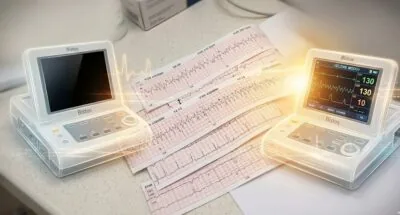
NST results are generally evaluated as either "reactive" or "non-reactive".
What is reactive NST?
This is when the baby's heart rate increases as expected with movement. It usually indicates that the baby is doing well.
What is non-reactive NST?
This refers to insufficient observation of expected movement or heart rate changes. In this case, additional tests or a repeat NST assessment may be necessary.
The NST result is not evaluated in isolation. The doctor considers several criteria together, including the ultrasound, the mother's complaints, and the gestational age.
Does NST harm the baby?
NST is a completely external, radiation-free, safe test. It does not harm the mother or the baby.
Therefore, it is one of the methods safely used in pregnancy monitoring.
What does it mean if contractions are detected on an NST (Non-Stress Test)?
Uterine contractions can be seen during an NST (Non-Stress Test). False contractions are particularly common in the later weeks of pregnancy.
However, regular and frequent contractions may suggest that labor has begun. In such cases, the doctor may perform a further assessment.
In Pregnancy Monitoring Why are regular check-ups important?
Pregnancy progresses differently for every expectant mother. Regular gynecological checkups allow for close monitoring of the health of both the mother and the baby.
Monitoring methods like NST allow potential risks to be identified early and necessary precautions to be taken.
Providing services in the field of gynecology and obstetrics in Başakşehir. As Op. Dr Tuba Nadide YılmazIt offers support to expectant mothers with modern monitoring methods at every stage of pregnancy. Pregnancy monitoring, NST evaluation, and preparation for childbirth are carried out according to individual plans.
For more information and to schedule an appointment you can contact us.


