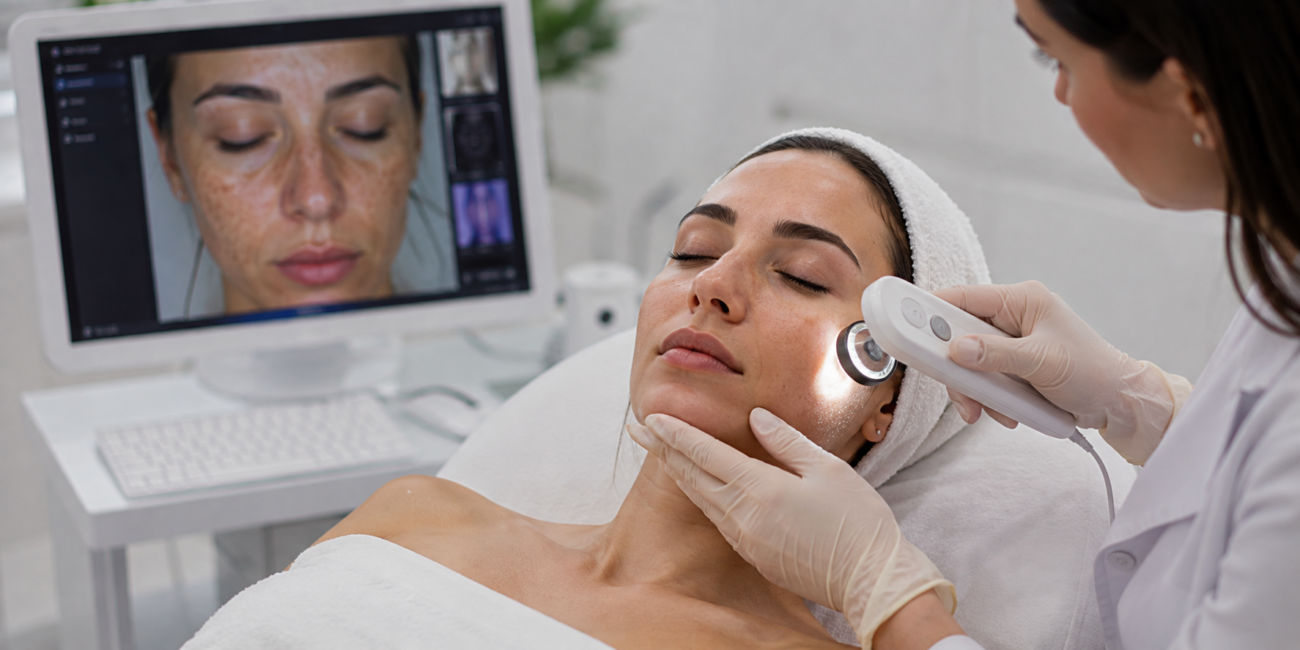
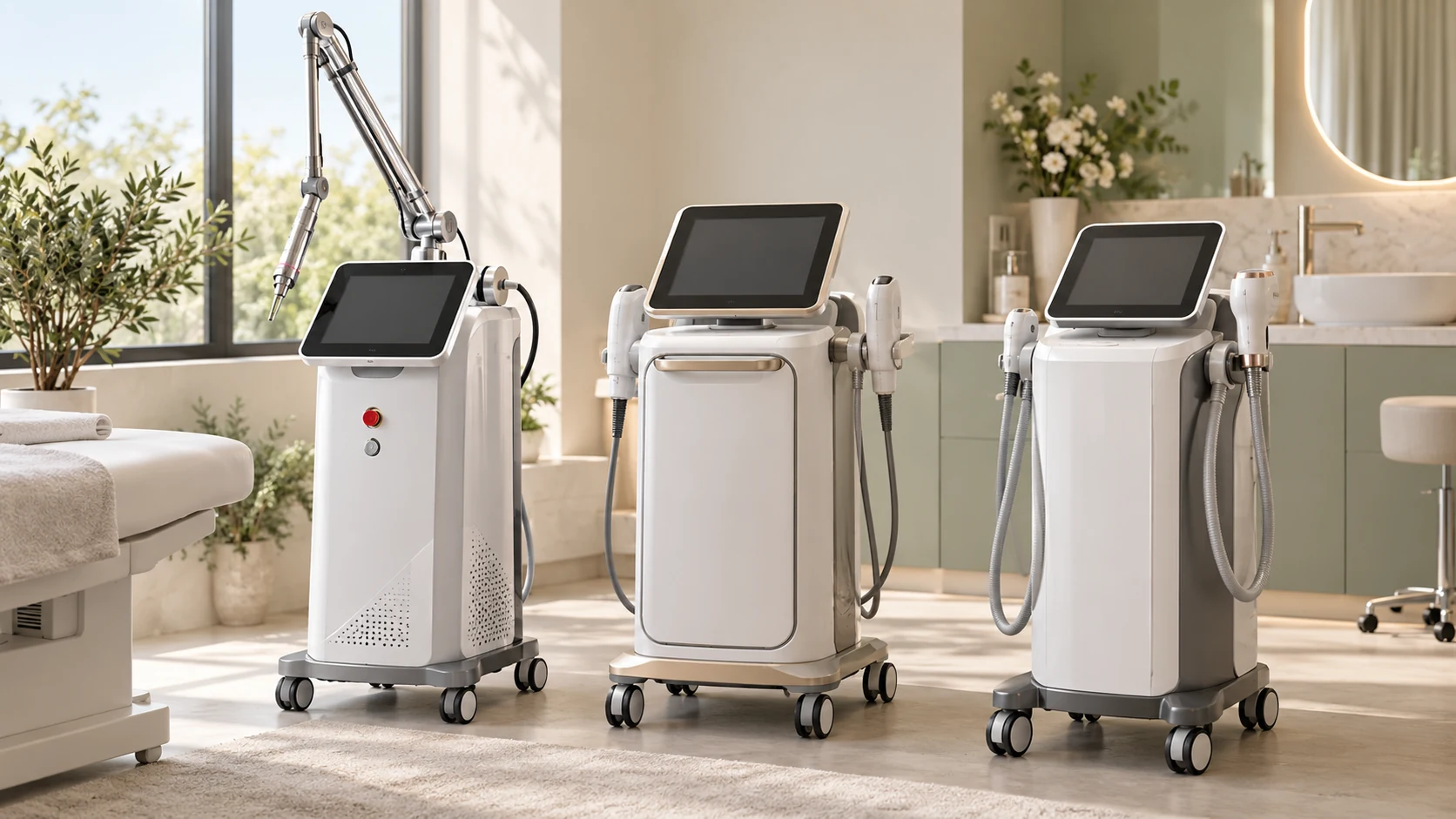
In the field of genital aesthetics and women's health, the names of energy-based technologies such as laser, HIFU and radiofrequency are heard more frequently in recent years. Women who do research due to vaginal dryness, feeling of looseness, postpartum tissue changes or some functional complaints often encounter the same question:
Are vaginal laser, vaginal HIFU and vaginal radiofrequency the same procedure?
No. The type of energy these methods use, the effect they aim to create on the tissue, and their application features are different from each other.
So “which method is better?” Before asking the question, the reason for the complaint must be determined. A method that may be considered suitable for one woman may not be suitable for another woman.
What Does Vaginal Rejuvenation Mean?

The phrase “vaginal rejuvenation”, which is frequently used on the Internet, is not actually the name of a single medical procedure. Laser, radiofrequency, HIFU and various surgical or non-surgical genital applications can be marketed under this heading.
Therefore, instead of evaluating a procedure only under the name "vaginal rejuvenation", it is more accurate to know which technology is used and which complaint is targeted.
Changes in the genital area;
- Pregnancy and birth,
- Aging,
- Menopause and hormonal changes,
- Properties of connective tissue,
- Pelvic floor functions It can be affected by many different factors such as
.
Therefore, the first stage is not to choose the technology, but to determine the source of the complaint.
What is Vaginal Laser?

Vaginal laser is one of the energy-based methods based on the controlled application of laser energy of certain wavelengths to the tissues.
Different laser systems may be used in genital applications. The type of device used and the application protocol are not the same.
For what purposes is vaginal laser researched?
Vaginal laser systems have been investigated especially for menopause-related vaginal dryness and tissue changes and some urinary complaints.
However, the scientific evidence is not the same in every field of use. Particularly in stress urinary incontinence, current systematic reviews show that more powerful and long-term studies are needed to reach definitive conclusions.
Therefore, laser application should not be seen as an automatic alternative to a standard treatment.
What is Vaginal Radiofrequency?

Vaginal radiofrequency is a different technology that uses radiofrequency energy instead of laser light.
The purpose of radiofrequency systems is to stimulate the biological response in the tissue by creating a controlled thermal effect.
Is radiofrequency the same as laser?
No.
Although both methods can be classified as energy-based technology, the energy used and the way they interact with the tissue are different.
Radiofrequency technologies are being investigated in terms of supporting tissue properties in the genital area and various functional complaints.
However, here too, the suitability of the application to the individual and the features of the device used are important.
What is Vaginal HIFU?

HIFU is High Intensity Focused Ultrasound, that is, high intensity focused ultrasound technology.
Unlike laser and radiofrequency, it uses focused ultrasound energy.
It is aimed to focus the energy on the determined tissue depths. Although there is an extensive research literature on the use of HIFU in different medical fields, applications for the genital area are a newer and developing field.
In what cases is vaginal HIFU evaluated?
HIFU technology is being researched in the genital area, especially on the feeling of vaginal laxity and tissue properties.
However, an approach such as "HIFU definitely narrows the vagina" or "it gives the same result in every patient" is not scientifically correct.
Op. Dr. HIFU technology is also among the methods used in the current women's health practices of Tuba Nadide Yılmaz Clinic.
What is the Difference Between Laser, HIFU and Radiofrequency?

The main difference between the three methods is the energy technology used.
vaginal laser
Uses laser energy. Different laser types and application protocols may be available.
vaginal radiofrequency
It aims to create a controlled thermal effect with radiofrequency energy.
Vaginal HIFU
It is based on the principle of transmitting focused ultrasound energy to specific tissue levels.
Therefore, it is not correct to consider these three applications only as “vaginal tightening devices”.
Which Technology is Better?

It would not be right to answer this question with a single technology name.
Because when choosing treatment, it should first be determined which complaint the woman is experiencing.
Examples include:
- Vaginal dryness,
- vaginal laxity sensation,
- Postnatal tissue changes,
- Discomfort during sexual intercourse,
- Urinary incontinence,
- Pelvic floor weakness
is not the same problem.
Even two seemingly similar complaints may have different reasons.
Therefore, instead of choosing the device before the examination, it is a better approach to discuss the appropriate options after the gynecological evaluation.
Which Method is Used to Feel Vaginal Laxity?

Vaginal relaxation The feeling may not only be due to changes in vaginal tissues.
Weakening of the pelvic floor muscles, anatomical changes during birth, or decreased pelvic organ support may also create a similar feeling.
First, the reason should be determined
While pelvic floor exercises or physiotherapy may be sufficient for some women, energy-based applications may be considered for some women. In case of significant anatomical changes, different treatment options may come to the fore.
Therefore, laser, HIFU or radiofrequency should not be chosen solely based on the complaint "I feel relaxation".
Which Technology is Used for Vaginal Dryness?
Vaginal dryness may occur especially during menopause or in different periods when estrogen levels decrease.
However, energy-based applications are not the only option in the treatment of dryness.
Different medical approaches can be evaluated depending on the person's age, menopause status, medications used, health history and severity of the complaint.
ACOG specifically emphasizes that vaginal laser and other energy-based methods are not FDA-approved for the treatment of menopausal symptoms.
Therefore, it is not appropriate to turn directly to an energy-based application without evaluating the current standard treatment options.
Urinary Incontinence Is Laser, HIFU or Radiofrequency Used?
There are different types of urinary incontinence and their treatments are different from each other.
Stress urinary incontinence, which occurs during coughing, sneezing or exercise, and urinary incontinence, which is characterized by a sudden feeling of urgency, do not occur through the same mechanism.
Therefore, first of all, the type of urinary incontinence should be determined.
A Cochrane review published in 2025 shows that the current scientific evidence for the effect of vaginal laser on stress urinary incontinence is very low certainty.
Pelvic floor rehabilitation and other established treatment options are also part of the evaluation process.
Are There Risks of Energy-Based Genital Practices?

Yes. Just because they are not surgical does not mean they are risk-free.
Possible complications reported in energy-based vaginal applications include;
- Burn,
- Pain,
- Scar formation,
- Pain during sexual intercourse,
- Long lasting sensitivity There is
.
ACOG recommends that patients be informed of these risks and the limits of available scientific evidence.
It is therefore important that the application be performed by an experienced physician and that the correct patient selection is made beforehand.
Is the same procedure applied to every woman?
No.
Even if two women of similar ages experience the same complaint, this does not mean that the same treatment is appropriate.
What can be evaluated during the examination?
- Age and menopausal status
- Birth history
- Condition of vaginal and vulvar tissues
- Pelvic floor functions It can be affected by many different factors such as
- Vaginal dryness
- A feeling of vaginal laxity
- Urinary incontinence
- Pain during sex
- Previous applications
- Current medicines
- Patient expectations
After this evaluation, it can be decided whether any application is required and, if so, which approach may be appropriate.
Can Laser, HIFU and Radiofrequency Be Used Together?
It may be technically possible to use different energy technologies in the same person. However, the existence of more than one technology does not mean that applying them all together will provide better results.
If treatment combination is to be performed, the reason for this should be the person's complaint and examination findings.
The aim is not to implement as many operations as possible, but to determine the approach required.
Conclusion: Correct Patient Selection, Not Technology, Should Be in the Foreground
Vaginal laser, vaginal HIFU and vaginal radiofrequency are not the same applications. Laser uses light energy, radiofrequency uses electromagnetic energy, and HIFU uses focused ultrasound energy.
However, technological differences alone do not determine which practice is appropriate for a woman.
Vaginal dryness, feeling of looseness, postpartum changes, urinary incontinence or discomfort during sexual intercourse may have different causes. For this reason, first of all, gynecological evaluation should be performed and all alternatives, including standard treatment options, should be considered together.
At Dr Tuba Nadide Yılmaz’s clinic, technologies such as laser, HIFU and radiofrequency may be considered for genital aesthetics and women’s health according to symptoms and examination findings.
Contact us to discuss an appropriate treatment plan.
We are here for your questions
Contact our clinic for information and appointment requests.
Contact the clinic