The appearance of the genital area changes throughout life. Aging, hormonal changes, pregnancy and childbirth, weight changes and individual anatomy can all affect the appearance of external genital tissues over time.
One such change is a reduction in volume in the outer labia, or labia majora.
In recent years, outer labia fillers, also called labia majora fillers or more broadly genital fillers, have emerged as one of the nonsurgical options considered for volume loss in the external genital area.
However, outer labia that look thin, full, asymmetric or different from each other do not, on their own, indicate a health problem. There is a wide range of normal female genital appearances.
When considering a cosmetic genital procedure, the first question should therefore be what has changed and whether any intervention is actually needed, before deciding which procedure to have.
Where Are the Outer Labia?
The external female genital area is generally called the vulva.
The vulva contains several anatomical structures. Among these, the labia majora and labia minora are commonly called the outer and inner labia, respectively.
What Are the Labia Majora?
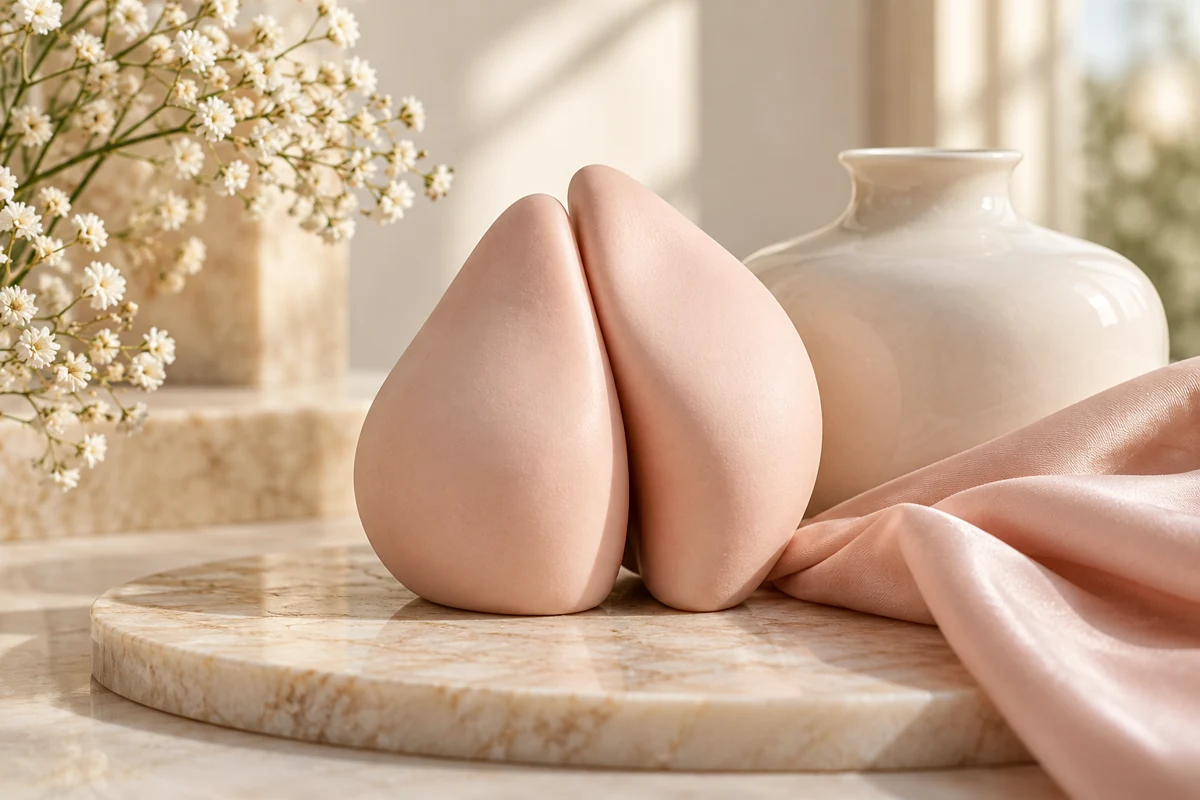
The labia majora are folds of skin on the outer part of the vulva that contain fat and connective tissue.
Hair on their outer surface is normal after puberty. They form the outermost labial structures and vary considerably between individuals in size, fullness, symmetry and appearance.
What Are the Labia Minora?
The labia minora are thinner folds of tissue inside the labia majora.
In some women, the labia minora lie within the outer labia; in others, they are visible externally. It is also very common for one side to be longer or shaped differently from the other.
None of these features is, by itself, considered abnormal.
What Is the Difference Between the Labia Majora and Labia Minora?
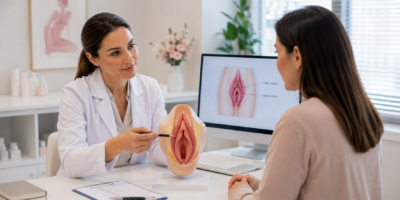
This distinction is particularly important for understanding the difference between outer labia fillers and labiaplasty.
Labia majora refers to the outer labia, while labia minora refers to the inner labia.
Outer labia fillers are generally an injection-based treatment intended to restore volume lost from the labia majora.
Labiaplasty usually refers to surgically changing the size or shape of the labia minora, or inner labia.
The two procedures therefore address different anatomical structures and concerns.
Why Does Volume Loss Occur in the Genital Area?
Volume loss in the genital area may have more than one cause.
Because the labia majora contain fat and connective tissue, they can be affected by aging and changes in body composition, just like other areas of the body.
Does Aging Change the Appearance of the Labia Majora?
Yes.
Age-related changes in the skin, connective tissue and tissues beneath the skin can also occur in the genital area.
The outer labia may appear thinner or less full over time.
However, the extent of these changes varies between individuals.
Does Menopause Affect the Genital Area?
Declining estrogen levels during menopause can cause changes in vulvar and vaginal tissues.
Tissues may become thinner and drier. Symptoms such as vaginal dryness, sensitivity and discomfort during sex can also occur as part of genitourinary syndrome of menopause.
Changes in the appearance of external genital tissues may become more noticeable during this period too.
However, dryness or pain during menopause should not be attributed solely to volume loss in the outer labia.
Can Weight Loss Cause Volume Loss in the Outer Labia?
Because the labia majora contain fatty tissue, significant changes in body weight can affect the appearance of the external genital area.
After substantial weight loss in particular, some people may notice that the outer labia look less full or more lax than before.
However, the same change is not expected in every woman who loses weight.
Genetics, age, skin elasticity and body fat distribution can all affect appearance.
Can the Appearance of the Outer Labia Change After Childbirth?
Significant physiological changes occur in the genital area during pregnancy and childbirth.
Increased blood flow, hormonal changes and tissue changes during pregnancy can affect its appearance.
The vulva, vagina and perineum also stretch considerably during vaginal birth.
Although much of the tissue recovers over time after childbirth, some women notice that the genital area looks different from how it did before pregnancy.
Can Hormonal Changes During Breastfeeding Contribute?

Lower estrogen levels during breastfeeding can contribute to changes such as vaginal dryness and tissue sensitivity.
Not every postpartum change in the genital area should therefore be treated as a cosmetic problem.
The body needs time to recover and hormonal balance needs time to change, particularly in the early postpartum period.
What Are Outer Labia Fillers?
Outer labia fillers involve injecting filler material into tissue to reduce volume loss in the labia majora.
The procedure may also be called labia majora filler treatment or genital filler treatment.
Current clinical studies are investigating the use of hyaluronic acid-based fillers in particular to restore labia majora volume.
What Is Hyaluronic Acid?

Hyaluronic acid is a molecule naturally present in the human body that has the ability to retain water.
Hyaluronic acid-based fillers used in medical aesthetics are injectable materials manufactured to have specific properties.
Not every filler used in the face should be assumed suitable for the genital area.
The properties of the material, injection technique and individual anatomy should be assessed together.
What Is the Purpose of Labia Majora Fillers?
The main purpose of labia majora fillers is to restore some of the volume lost from the outer labia.
Treatment may be considered for concerns such as:
- Noticeable volume loss in the outer labia
- Age-related thinning
- Reduced volume noticed after weight loss
- Reducing the appearance of certain asymmetries
- Dissatisfaction with the appearance of the external genital area
These are among the circumstances in which it may be considered.
However, having one of these features does not necessarily mean that filler treatment is needed.
Do Outer Labia Fillers Tighten the Vagina?
No.
These two concepts should be distinguished.
Outer labia fillers are not intended to narrow the internal vaginal canal.
The labia majora are on the outside of the vulva. Vaginal laxity and pelvic floor problems involve different anatomical structures.
Injecting filler into the outer labia and performing a vaginal tightening procedure are therefore different treatments.
Are Outer Labia Fillers and Vaginal Fillers the Same Thing?
“Vaginal fillers” is a broad term in everyday use.
Calling all injections in the genital area vaginal fillers can create anatomical confusion.
Outer labia fillers specifically aim to add volume to the labia majora.
It is therefore more accurate to specify which area will be treated and for what purpose.
What Is the Difference Between Outer Labia Fillers and Labiaplasty?
Although often confused, these are very different procedures.
What Do Outer Labia Fillers Do?
Outer labia filler treatment uses injections to add volume to the labia majora.
It does not remove tissue or change the length of the labia minora.
What Does Labiaplasty Do?
Labiaplasty usually involves surgically altering the size and shape of the inner labia, or labia minora.
For example, an assessment for labiaplasty may be considered if the inner labia rub against clothing, cause discomfort during exercise or their appearance causes significant personal distress.
Outer labia fillers are therefore not a nonsurgical alternative to labiaplasty.
The two procedures address different anatomical concerns.
Are Outer Labia Fillers Used to Hide the Inner Labia?
This topic requires particular care.
Labia minora that extend beyond the outer labia are part of normal anatomical variation. Visible inner labia are not, on their own, a disease or deformity.
Adding volume to the outer labia may change the visibility of the labia minora in some people. However, filler treatment solely to “hide” the inner labia is not a medical necessity for everyone.
The assessment should first consider whether the person's anatomy falls within normal variation and why they want the procedure.
Does Every Case of Volume Loss in the Outer Labia Require Treatment?
No.
This is one of the key points of this article.
Female external genital anatomy is highly varied.
Thin or full outer labia, visible inner labia, mild asymmetry and age-related genital changes are often normal anatomical features.
There is no single aesthetic standard for how the genital area should look.
Social media, adult content, advertising and heavily edited images can create unrealistic expectations about normal anatomical diversity.
Assessing expectations is therefore just as important as the procedure itself in genital cosmetic treatment.
Do Outer Labia Fillers Increase Sexual Pleasure?
Outer labia fillers are primarily considered for volume restoration.
Some clinical studies published in recent years have also reported improvements in sexual function scores after labia majora filler treatment.
However, these findings do not establish that outer labia fillers increase sexual pleasure or improve orgasm.
Female sexual function involves many factors, including hormonal status, arousal, genital sensitivity, pelvic floor function, pain, psychological wellbeing and relationship factors.
Outer labia fillers should therefore not be regarded as a “sexual performance enhancement” procedure.
Are the Effects of Outer Labia Fillers Permanent?
Hyaluronic acid-based fillers are not permanent materials.
How long they remain in the tissue can vary with the product, amount used, metabolism and other individual characteristics.
Although studies of labia majora fillers have reported results lasting for months, the same duration cannot be guaranteed for everyone.
It is therefore inappropriate to promise a fixed number of years.
Are There Risks with Outer Labia Fillers?
As with any injection procedure, genital fillers can cause unwanted effects.
Possible effects after treatment include:
- Sensibility
- Swelling
- Bruising
- Pain
- Temporary asymmetry
- Injection-site reactions
These local effects may occur after treatment.
Infection and less common complications must also be considered with injection procedures.
Recent clinical studies have reported that hyaluronic acid-based labia majora fillers are generally well tolerated. However, research in this area remains limited compared with much more widely used aesthetic treatments such as facial fillers.
Treatment should therefore be planned by a doctor who understands the anatomy and can assess complications.
Why Is a Gynecological Assessment Important Before Outer Labia Fillers?

Not every genital change is cosmetic.
Symptoms such as itching, burning, pain, discoloration, sores, a lump, new swelling or pain during sex should first be investigated to establish their cause.
An aesthetic assessment should also consider:
- Age
- Pregnancy and childbirth history
- Menopausal status
- Weight changes
- Previous genital surgery
- Current medicines
- Existing gynecological symptoms
- Expectations of the procedure
These factors should be assessed together.
Who Might Be Suitable for Outer Labia Fillers?
Suitability cannot be determined from a photograph or external appearance alone.
After an examination, genital filler options may be considered for people who have noticeable volume loss in the labia majora and are bothered by it.
However, infection, active genital disease, unexplained pain or another gynecological problem requires assessment of the underlying condition first.
The decision should be individualized according to anatomy and expectations.
Outer Labia Fillers or Labiaplasty?
These procedures should not be viewed simply as interchangeable alternatives.
Labia majora fillers may be considered for volume loss in the outer labia, while assessment for labiaplasty may be relevant to functional or cosmetic concerns involving the size or shape of the inner labia.
Some women may not need any procedure.
The appropriate approach is to assess the concerns and anatomy before choosing a treatment, rather than select a procedure in advance of seeing the doctor.
Conclusion: Genital Cosmetic Treatment Should Not Aim for a Standardized Appearance
Outer labia fillers are one of the injection-based methods considered for volume loss in the labia majora associated with age, weight changes and other individual factors.
Studies published in recent years on hyaluronic acid-based labia majora fillers have reported positive findings for volume restoration and patient satisfaction. However, the evidence continues to develop, and more research is needed, particularly on long-term outcomes.
Above all, external genital appearance varies considerably between individuals. Not every asymmetry, thin area or difference in appearance is a problem requiring treatment.
Outer labia fillers, labiaplasty and other genital cosmetic procedures have different purposes and target different anatomical areas. Deciding which approach is appropriate after a gynecological assessment is therefore more suitable.
At Dr Tuba Nadide Yılmaz's Clinic, aesthetic and functional genital changes can be assessed gynecologically, and genital cosmetic options can be planned according to the individual's anatomy, concerns and expectations.
Contact us to discuss an appropriate treatment plan.
We are here for your questions
Contact our clinic for information and appointment requests.
Contact the clinic