
Pregnancy and childbirth can affect not only the abdominal area or hormones in the female body, but also the genital area and pelvic floor. Especially after vaginal birth, some women may notice a feeling of vaginal laxity, dryness, urinary incontinence, or a change in the appearance of the genital area that they have not experienced before.
While some of these changes decrease during the recovery period after birth, some complaints may persist for a longer time.
Postpartum vaginal changes The important thing is not to focus on a single application, but to correctly determine the source of the complaint. Many factors, from pelvic floor muscles to vaginal tissues, from hormones to changes that occur during birth, should be evaluated together.
What May Change in the Vaginal Area After Birth?

The increasing weight of the uterus during pregnancy puts additional load on the pelvic floor. During birth, the vagina, perineum and pelvic floor tissues may stretch significantly.
Especially after vaginal birth, the following changes may be noticed:
- A feeling of loosening or enlargement of the vagina
- Loss of strength in pelvic floor muscles
- Urinary incontinence during coughing, sneezing, or exercise
- Vaginal dryness
- Tenderness or pain during sexual intercourse
- Shape and appearance changes in the external genital area
- Tenderness at the birth stitch or episiotomy site
- Differences in sexual life
Not every woman experiences all of these. The type of birth, the baby's weight, the number of births, the person's connective tissue and the healing process can affect the outcome.
What Causes Vaginal Laxity After Birth?
Postpartum vaginal laxity is one of the changes most frequently mentioned by women.
During vaginal birth, the pelvic floor muscles and surrounding connective tissues stretch significantly to allow the passage of the baby. Although the tissues recover over time after birth, it may be thought that the prenatal feeling does not fully return in some women.
Factors that may affect the feeling of vaginal relaxation
Number of births, birth weight of the baby, prolonged labor, use of vacuum or forceps, structure of the connective tissue and condition of the pelvic floor muscles may play a role in this process.
Therefore, when complaining of vaginal laxity, it is important to look not only at the appearance of the vagina but also at the pelvic floor functions.
Is Postpartum Urinary Incontinence Normal?

After birth, a few drops of urine may be leaked, especially when coughing, sneezing, laughing, running or lifting weights.
Strain on the pelvic floor muscles during pregnancy and birth may contribute to the emergence of this complaint.
While it decreases significantly over time in some women, it may continue in others.
Why are pelvic floor exercises important?
Proper exercise of the pelvic floor muscles can help support bladder control. However, it is important to do the exercise with the right muscle group.
In cases of ongoing urinary incontinence, the type and degree of the problem should be evaluated instead of just exercising.
Why Does Vaginal Dryness Occur After Birth?
Hormonal changes after birth, especially low estrogen levels during breastfeeding, may contribute to vaginal dryness.
Dryness;
- Discomfort during sexual intercourse,
- Burning,
- Sensitivity,
- Sensation of difference in vaginal tissues Can create
.
In this case, the treatment plan should be determined according to the cause of the complaint, breastfeeding status and the person's health history.
Can Genital Appearance Change After Birth?
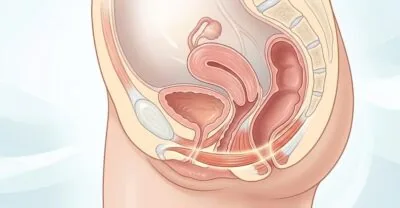
Yes. Pregnancy and birth can also cause changes in the external genital area.
Shape changes, asymmetry, excess tissue or color changes may be noticed in the labia. The appearance of the perineal area after healing of an episiotomy or birth tear may also be different than before birth.
It is important here to distinguish between normal anatomical diversity and functional problems that actually require treatment.
Not every change in appearance is a medical problem, and not every change requires action.
What Treatments Can Be Considered for Postpartum Genital Complaints?
Treatment should be planned after the source of the complaint is determined.
While only time and pelvic floor rehabilitation are sufficient for some women, medical or surgical options may be considered for others.
Pelvic floor exercises and rehabilitation
It may be one of the first options for women with weakness in the pelvic floor muscles.
Properly performed exercises can help support muscle strength and bladder control.
Laser and radiofrequency applications
Energy-based applications for vaginal tissues have been increasingly investigated in recent years.
Laser and radiofrequency technologies have been the subject of various studies in terms of vaginal laxity, tissue properties and some functional complaints. However, scientific evidence on the effectiveness of these practices is still developing and it cannot be said that they are suitable for every patient.
Therefore, the procedure decision should be made after the examination, by evaluating the expected benefits and possible risks together.
The Place of HIFU Technology in Postpartum Genital Applications
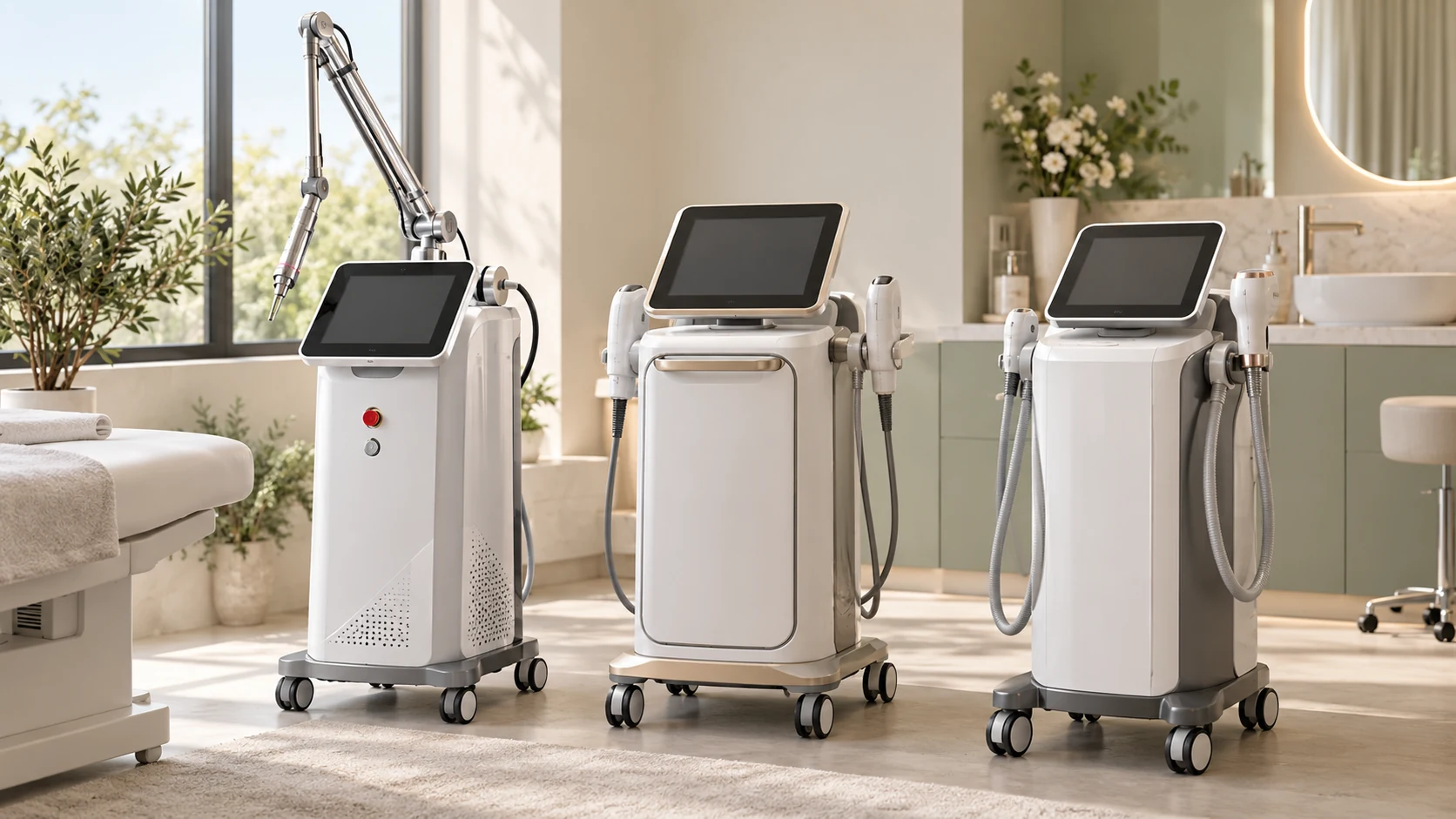
HIFU, or high-intensity focused ultrasound, is a technology that allows energy to be focused at specific tissue depths.
It is one of the new generation energy-based approaches that has attracted attention in recent years for use in women's health and genital area applications.
Can HIFU be applied to everyone?
No.
It is not correct to say that every woman who has postpartum vaginal laxity or other functional complaints is suitable for HIFU.
First of all, the problem is;
- Pelvic floor muscles,
- From vaginal tissues,
- Hormonal changes,
- Birth trauma,
- Deterioration in pelvic organ support It needs to be determined which
is related to.
The suitability of HIFU technology can only be evaluated after a gynecological examination.
Op. Dr. Among the new generation technologies used in women's health at Tuba Nadide Yılmaz Clinic, there is HIFU application. Which patients it can be preferred for and what it can provide unlike other methods are determined after personal evaluation.
When Can Surgical Genital Aesthetics Be Considered?
Not every postpartum change can be corrected by non-surgical methods.
Surgical options may be considered in some women with significant anatomical changes, functional discomfort in the labia, postpartum deformation in the perineal area, or advanced vaginal laxity.
Among these, according to the person's needs;
- Labiaplasty
- Perineoplasty Operations such as
- Vaginoplasty
can be evaluated.
Surgical decision should be made not only based on aesthetic expectations, but also by evaluating the anatomical structure, functional complaints, the person's expectations and possible risks.
How to Decide Which Method is Appropriate?
There is no single treatment that can be applied to everyone for postpartum genital changes.
While the main problem in one woman is the weakness of the pelvic floor muscles, in another woman it may be vaginal dryness, tissue change, birth scar or anatomical change.
Therefore, during the examination;
Main points to consider
- Mode of birth and number of births
- A feeling of vaginal laxity
- Condition of the pelvic floor muscles
- Urinary incontinence
- Vaginal dryness
- Pain during sex
- Anatomical structure of the genital area
- History of episiotomy or birth tear
- Breastfeeding status
- New pregnancy plan
- Patient expectations
should be considered together.
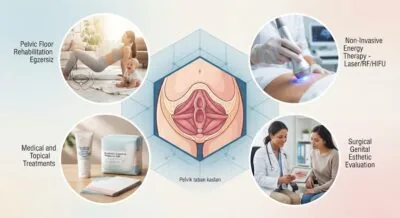
As a result of this evaluation, the appropriate approach can be determined among follow-up, pelvic floor rehabilitation, medical treatments, energy-based options such as HIFU, laser or radiofrequency, or surgical methods when necessary.
How Long After Birth Can Genital Aesthetic Evaluation Be Made?
In the weeks immediately following birth, genital tissues are still in the healing process. Hormonal changes continue and the properties of vaginal tissues may change over time, especially during breastfeeding.
Therefore, not every change seen in the early period should be considered permanent.
Depending on the type of complaint, the appropriate evaluation time may vary. Finding a new pregnancy plan may also affect the timing of treatment.
Therefore, it is more accurate to make a personal evaluation rather than accepting a certain period as a standard for all women.
When to Consult a Doctor for Postpartum Genital Changes?

Postpartum recovery varies from person to person. However, some complaints should not be postponed for a long time with the thought "I gave birth, it is normal".
In particular:
- Ongoing urinary incontinence,
- Significant pressure or downward sagging sensation in the vagina,
- Constant pain during sexual intercourse,
- Persistent vaginal dryness and burning,
- Ongoing pain in the birth stitch area,
- A feeling of vaginal laxity that affects daily life or sexual life If
is present, it would be appropriate to perform a gynecological evaluation.
Conclusion: Postpartum Genital Health Is Not Just a Single Procedure
Postpartum vaginal changes can cause very real and important complaints that women may find difficult to talk about. vaginal laxity, dryness, urinary incontinence, texture and appearance changes may each be caused by different reasons.
Therefore, the aim is not to directly focus on a specific operation, but first to determine the source of the problem.
Different options can be evaluated individually, from pelvic floor rehabilitation to medical treatments, from energy-based technologies such as HIFU, laser and radiofrequency to surgical genital aesthetic applications when necessary.
Op. Dr. At Tuba Nadide Yılmaz Clinic, postpartum genital and functional complaints are evaluated together with gynecological examination, and a personalized approach is planned among current technologies and other treatment options, including HIFU.
Contact us to discuss an appropriate treatment plan.
We are here for your questions
Contact our clinic for information and appointment requests.
Contact the clinic