
Many women approaching the age of 40 start to experience changes in their menstrual cycle and the same question comes to their mind: “Am I entering menopause?”
In fact, these changes often do not directly mean menopause. perimenopause, which begins before menopause and can last several years, is the transition process of the female body from the reproductive period to menopause.
During this period, menstruation may become more frequent or less frequent, night sweats, hot flashes, sleep problems and mood changes may occur. However, not all menstrual irregularities are caused by perimenopause, and not all irregular bleeding is considered normal.
What is Perimenopause?
Perimenopause is the natural transition period in which ovarian functions begin to change gradually and covers the period before menopause.
During this period, changes in the menstrual cycle may occur due to fluctuations in estrogen and progesterone hormones.
The duration of perimenopause may vary from person to person. In some women it may take several years, while in others it may be longer or shorter.
Menopause is defined retrospectively as 12 months have passed since the last menstrual bleeding.
What are the symptoms of perimenopause?

Perimenopause symptoms do not occur the same in every woman. While some women experience mild symptoms, others may experience complaints that may affect daily life.
The most common perimenopause symptoms
- menstrual irregularities
- Frequent or infrequent menstrual periods
- Increase or decrease in the amount of bleeding
- Night sweats
- Hot flashes
- sleep problems
- Mood swings
- Irritability
- difficulty concentrating
- Change in sexual desire
- Vaginal dryness
Since these symptoms can also be seen in different health problems, they do not alone diagnose perimenopause.
Is Menstrual Irregularity Normal After Age 40?
40 years menstrual irregularity is one of the most common findings of the perimenopause period.
During this period;
- Menstrual intervals may become shorter.
- Periods may come less frequently.
- Menstruation may not occur in some months.
- Bleeding time may vary.
Menstrual patterns may be expected to vary due to natural changes in hormone levels.
However, not every menstrual irregularity should be attributed to age.
Thyroid diseases, intrauterine polyps, myomas, hormonal disorders or other diseases affecting the inner layer of the uterus may also cause similar complaints.
When Is Heavy or Irregular Bleeding Important?
Changes in bleeding patterns may occur during perimenopause. However, some cases must be evaluated by a gynecologist and obstetrician.
Gynecological examination should not be delayed in the following cases:
- Very heavy menstrual bleeding
- Bleeding with large clots
- Bleeding between periods
- Bleeding after intercourse
- Prolonged bleeding
- Re-bleeding after menopause
- Unexpected new bleeding pattern
This type of bleeding does not always indicate serious illness. However, it is important to determine the underlying cause.
What Causes Night Sweats and Hot Flashes?
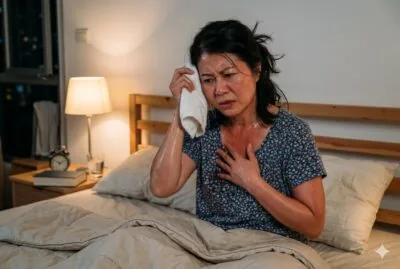
Fluctuations in estrogen levels during perimenopause can affect the body's thermoregulation mechanism.
For this reason, in some women;
- Sudden hot flashes
- Redness of face and neck
- Intense sweating
- Night sweats
can be seen.
These symptoms may affect quality of life and require individualized evaluation.
Are There Changes in Sleep, Mood and Sexual Desire?

Yes.
Perimenopause can affect not only menstrual cycle but also daily life.
Women in this period;
- Difficulty falling asleep,
- Frequent waking up at night,
- Don't wake up tired in the morning,
- Distraction,
- Increased anxiety,
- Mood lability,
- Decreased sexual desire,
- Discomfort during intercourse due to vaginal dryness He/she may experience complaints such as
.
These symptoms may occur in different degrees of severity in each woman.
Is Pregnancy Possible During Perimenopause?
Most of the time the answer to this question is yes.
During perimenopause, fertility decreases but does not disappear completely.
Ovulation may continue for some months even if it becomes irregular.
Therefore, it is important for women who are not planning a pregnancy to obtain information from their gynecologist about appropriate contraceptive methods.
It is not recommended to discontinue birth control before menopause is certain.
How is Perimenopause Diagnosed?

Perimenopause is not diagnosed by looking at blood tests alone.
During the diagnosis process;
Factors that can be taken into account in the physician's evaluation
- Age
- Changes in menstrual cycle
- Complaints
- Gynecological examination
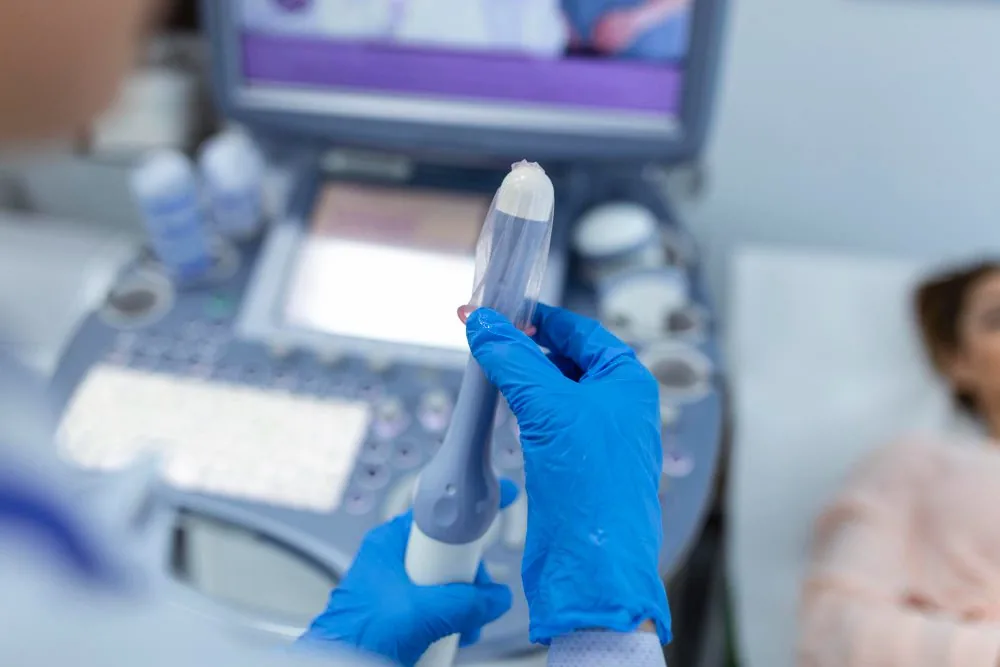
- Ultrasound when necessary
- Laboratory tests deemed necessary
- Person's health history
are evaluated together.
The same approach is not applied to every woman.
Conclusion
Perimenopause is a natural part of the pre-menopause period. During this process, menstrual irregularities, hot flashes, night sweats and mood changes may occur. However, not every irregular bleeding should be considered normal.
Especially new-onset, heavy, long-lasting or unexpected bleeding should be evaluated by a gynecologist and obstetrician. A personalized approach during perimenopause is important in terms of both preserving the quality of life and early diagnosis of different gynecological diseases that may be underlying.
Menstrual irregularities, perimenopause symptoms, pre-menopausal evaluation and gynecological examination processes for women's health Op. Dr. It is individually planned by Tuba Nadide Yılmaz and evaluated in line with current scientific guidelines.
For detailed information and appointment, you can contact .
We are here for your questions
Contact our clinic for information and appointment requests.
Contact the clinic