If you've noticed that your hair is falling out more than usual a few months after giving birth, you're not alone. Many mothers may begin to see more strands of hair on their comb, shower, or pillow during the postpartum period. This situation is often temporary and is considered one of the body's natural responses to post-pregnancy hormonal changes.
However, if the hair loss is very intense, there is significant thinning of the hair, or the process continues longer than expected, it is important to investigate different underlying causes. Because while postpartum hair loss is sometimes due only to the hormonal transition period, it can sometimes be accompanied by iron deficiency, vitamin deficiencies, thyroid problems, stress, nutritional deficiency or different hair diseases.
In this article, we discuss the causes of postpartum hair loss, how long it can last, in which cases it is necessary to consult a doctor, and how planned PRP and hair mesotherapy applications in suitable patients can support the hair recovery process.
What is Postpartum Hair Loss?

Postpartum hair loss is often associated with a temporary hair loss condition medically called “telogen effluvium”. The increased estrogen hormone during pregnancy helps hair stay in the growth phase longer. For this reason, many women notice that their hair looks fuller, more vibrant and stronger during pregnancy.
After birth, hormone levels begin to change again. Hair strands whose shedding is delayed during pregnancy may enter the resting and shedding phase within a few months after birth. This may suddenly create the feeling of intense hair loss.
This process may become especially evident in the 2nd or 3rd month after birth. It may be noticed earlier or later in some mothers. In most cases, hair loss decreases over time and the hair begins to return to its old cycle.
What Causes Hair Loss After Birth?
There is no single cause of postpartum hair loss. Although the most common cause is hormonal changes, the mother's general health condition, type of birth, breastfeeding process, sleep patterns, stress level and eating habits can also affect hair health.
Hormonal Changes
Rising estrogen levels during pregnancy may delay the transition of hair into the shedding phase. As estrogen levels decrease after birth, hair may begin to fall out more intensively. This condition does not usually mean permanent hair loss. It is the process of rebalancing the hair cycle.
Iron and Vitamin Deficiencies
Iron stores may decrease in the postpartum period. Hair loss may be more noticeable, especially in mothers who experienced anemia during pregnancy, excessive blood loss at birth, or inadequate nutrition. Values such as ferritin, vitamin B12, vitamin D, zinc and folate are important for hair health.
Thyroid Problems
Changes in thyroid functions may occur in the postpartum period. Underactive or overactive thyroid gland may increase hair loss. Therefore, thyroid tests may need to be evaluated in cases of long-lasting or intense hair loss.
Stress, Insomnia and Fatigue
Newborn baby care, irregular sleep, breastfeeding process, physical recovery and emotional changes can create an intense burden on the mother's body. Stress and fatigue can affect the hair cycle, causing increased shedding.
Malnutrition
The desire to lose weight quickly in the postpartum period, irregular meals or insufficient protein intake may negatively affect hair health. In order for the hair strands to remain strong, protein, iron, omega-3 fatty acids, vitamins and minerals must be taken in a balanced manner.
How Long Does Postpartum Hair Loss Last?

Postpartum hair loss is a temporary process in most women. It usually begins within a few months after birth and decreases over time. For many mothers, the hair cycle becomes more balanced within 6 to 12 months.
However, this period may vary from person to person. While hair loss lasts shorter in some women, it may continue longer in some women. If hair loss lasts longer than 6 months, increases gradually, there is a significant opening in the hairline, or is accompanied by symptoms such as itching, redness, and dandruff on the scalp, expert evaluation is important.
In what cases should a doctor be consulted?
Although postpartum hair loss is a common and often temporary condition, some symptoms should be taken into consideration. It is useful to be examined in the following cases:
If Hair Loss Is Very Intense
If more hair than normal is visible in the shower, on the comb, or on the pillow and this causes significant concern in daily life, an evaluation should be made.
If There is Significant Thinning of Hair
If the hair parting line is widening, if gaps are noticed on the scalp, or if the loss becomes regional, shedding may not only occur after birth.
If the shedding continues for a long time
If hair loss that begins after birth does not decrease even after months, underlying deficiencies or hormonal problems should be investigated.
If Accompanied by Additional Complaints
If there are symptoms such as weakness, palpitations, weight change, menstrual irregularity, intense fatigue, itching, redness or crusting on the scalp, more detailed examination may be required.
How Does the Diagnosis Process Progress in Postpartum Hair Loss?

The first step in postpartum hair loss is a detailed evaluation. The patient's time of birth, breastfeeding status, diet, medications used, previous hair loss history, menstrual cycle and general health condition are considered together.
During the examination, the structure of the scalp, the prevalence of hair loss, the quality of the hair strands and the areas of thinning are evaluated. Blood tests may be requested in patients deemed necessary.
These tests may include complete blood count, ferritin, iron, vitamin B12, vitamin D, zinc, thyroid function tests, and some hormonal evaluations. The goal is to identify deficiencies or accompanying health problems that may increase hair loss.
Is Postpartum Hair Loss Permanent?
Postpartum hair loss is not permanent in most women. Hair follicles are usually not damaged. The problem is rather a temporary change in the hair cycle. Therefore, with proper follow-up, balanced nutrition, replacement of missing values and appropriate support treatments, hair can recover over time.
However, in some women, the postpartum period may make previously unnoticeable female pattern hair loss visible. Therefore, the character of the spill is important. Details such as widespread hair loss, regional thinning, receding hairline or family history of hair loss should be evaluated together.
What Should Be Considered for Hair Recovery?
It is important to be patient in postpartum hair loss. It takes time for hair to regain strength. In this process, some steps that will support hair and general health may be useful.
Balanced diet
Protein, iron, zinc, omega-3, vitamin B12, vitamin D and folate are important for hair health. Eggs, fish, red meat, legumes, green leafy vegetables, nuts and whole grains can be included in a balanced diet plan.
Being Gentle to Your Hair
Gathering the hair too tightly, using high heat, combing it hard or applying chemical treatments frequently can cause the hair strands to break and increase the feeling of shedding. More gentle care should be preferred in the postpartum period.
Sleep and Stress Management
Sleeping patterns may not always be easy during new motherhood. Despite this, resting as much as possible, getting support and creating small routines to reduce stress can contribute to balancing the hair cycle.
Elimination of Deficiencies
If there are iron, vitamin or mineral deficiencies, it is important to replace them under the supervision of a doctor. Unconscious use of supplements is not correct. Each supplement product should be evaluated individually, especially during breastfeeding.
What is PRP Hair Treatment?

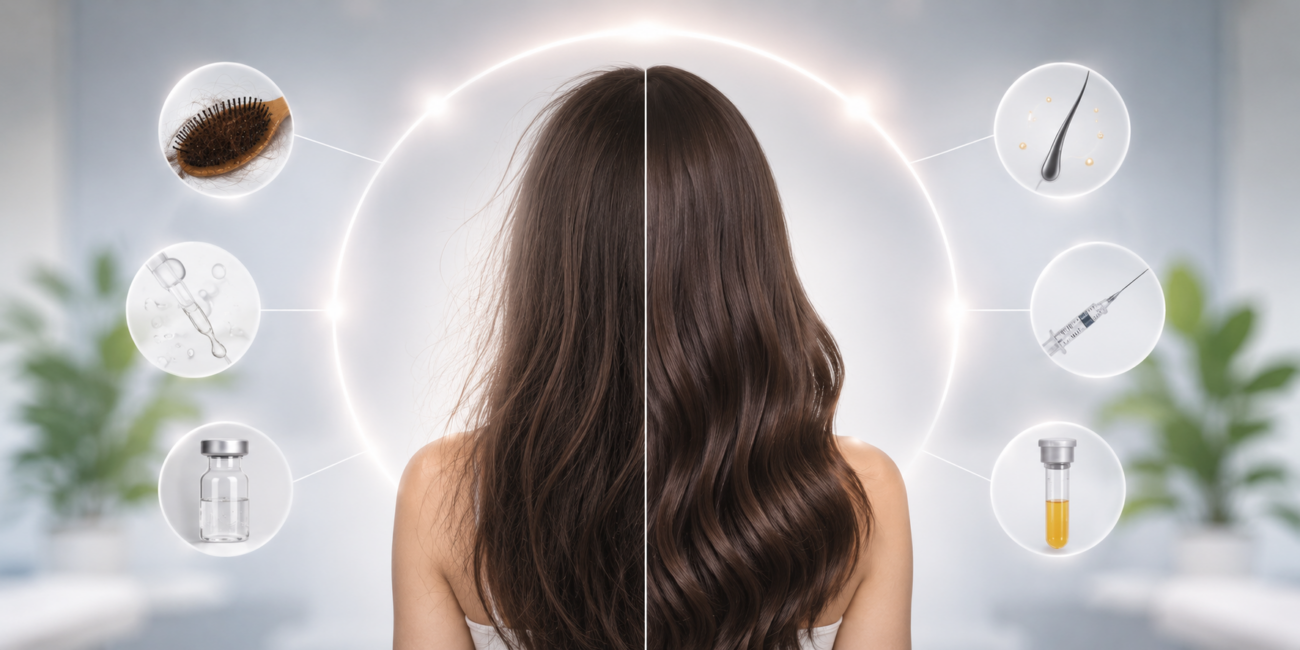
PRP is the application of platelet-rich plasma obtained from the person's own blood to the scalp after going through certain processes. Platelets are rich in growth factors. These growth factors are aimed to support hair follicles, improve hair quality and contribute to the renewal process of the scalp.
PRP hair treatment should not be considered as a standard procedure that will be applied to everyone in the same way. First of all, the cause of hair loss is evaluated. It can be applied to suitable patients with a specific session plan to support the hair recovery process.
What is Hair Mesotherapy?
Hair mesotherapy is the application of vitamins, minerals, amino acids, peptides and supporting ingredients to the scalp by micro-injection method. The aim is to deliver the supports needed by the hair follicles to the scalp area and to help strengthen hair quality.
Mesotherapy for postpartum hair loss should not be considered as a miraculous solution on its own, but as part of a correct diagnosis and personalized plan. Investigating deficiencies, supporting the diet, and addressing general health status are important for treatment success.
How to Plan PRP and Mesotherapy for Postpartum Hair Loss?

When planning PRP and hair mesotherapy for postpartum hair loss, the mother's breastfeeding status, general health condition, blood values, duration of hair loss and type of hair loss are taken into consideration. The same protocol is not applied to every patient.
In suitable patients, PRP and mesotherapy can be planned as sessions at regular intervals. The number of sessions and frequency of application varies according to the individual's needs. In some patients, the priority may be to correct iron or vitamin deficiency. In some patients, scalp supportive applications can be added to the treatment plan.
Therefore, the best approach to postpartum hair loss is to first understand the cause and then create a personalized support plan.
Are PRP and Hair Mesotherapy Safe During Breastfeeding?
During breastfeeding, each application should be evaluated individually. Since PRP is a procedure obtained from one's own blood, it can be evaluated in suitable patients. The ingredients used in hair mesotherapy are important. For this reason, any supportive treatment for breastfeeding mothers should be planned under the supervision of a doctor.
The aim here is to both support the mother's hair health and continue the breastfeeding process safely. Before making the application decision, the mother's general condition, medications used, blood values and needs should be examined together.
Why is it important to be patient with postpartum hair loss?
The hair cycle is a slow process. The effect of a support application made today will not be seen the next day. It takes time for hair follicles to strengthen, new hair to grow, and the quality of hair strands to improve.
Therefore, realistic expectations are important in postpartum hair loss. The aim is to evaluate hair loss correctly, determine the underlying causes, support the scalp and help the hair return to its healthy cycle.
What Can Be Done at Home for Postpartum Hair Loss?
Correct habits that can be practiced at home can support the treatment process. It is important not to tie the hair too tightly, reduce heat treatments, use soft combs, choose products that do not irritate the scalp, and pay attention to a balanced diet.
It is also necessary to avoid rapid weight loss diets in the postpartum period. Insufficient calorie and protein intake can increase hair loss. The nutrition plan for breastfeeding mothers should be created carefully for the health of both mother and baby.
Postpartum Hair Loss Can Also Be Psychologically Difficult
The postpartum period is already a physically and emotionally intense process. Rapid hair loss during this period can be worrying for many mothers. Seeing thinning hair when you look in the mirror and encountering dense strands on the comb can be demoralizing.
At this point, it is important for the mother to know that she is not alone. Postpartum hair loss is a common condition. However, it is not right to neglect the shedding that continues for a long time by saying "it will go away anyway". The healthiest approach is to follow the process and get expert support when necessary.
Conclusion: Postpartum Hair Loss Can Be Managed with Correct Evaluation
Postpartum hair loss is usually a temporary process that can be seen in most mothers. However, if the loss is intense, lasts a long time, or causes significant thinning of the hair, the underlying causes must be evaluated.
Iron deficiency, vitamin deficiencies, thyroid problems, stress, malnutrition and hormonal changes can affect hair loss. Therefore, accurate diagnosis, personalized follow-up and appropriate supportive treatments are important.
PRP and hair mesotherapy applications planned in suitable patients can contribute to the support of hair follicles and the hair recovery process. Dr. At Tuba Nadide Yılmaz clinic, an evaluation can be made for women experiencing hair loss in the postpartum period and a personalized support process can be planned.
If your hair loss is intense or has been going on for a long time, it would be useful to get an expert opinion to find out the reason and determine the appropriate approach for you.
For more information and to make an appointment, you can contact us at .
We are here for your questions
Contact our clinic for information and appointment requests.
Contact the clinic