

Although summer means sea, pool and holiday enjoyment, it is one of the periods when vaginal infections are more common in women. Especially staying in a wet swimsuit for a long time, increased sweating due to hot weather and humid environments can affect the balance of vaginal flora.
Although many women interpret complaints of itching, burning or discharge as "vaginal fungus", not every vaginal infection is a fungus. The two most common conditions in summer are vaginal yeast infection and bacterial vaginosis. Since these two diseases can show similar symptoms, it is important to make the correct diagnosis through gynecological evaluation.
Why Are Vaginal Infections More Common in Summer?

The vagina is a natural structure with its own balance of protective bacteria. When this balance is disrupted, the risk of developing infection may increase.
During summer months the main reasons that pose a risk are:
- Sitting for a long time in a wet swimsuit
- Not changing sweaty clothes for a long time
- Using tight and synthetic underwear
- Genital area that remains constantly moist due to intense heat
- Unnecessary use of antibiotics
- Uncontrolled use of vaginal products
Although these factors do not cause infection in every woman, they can prepare the appropriate ground.
What are the Symptoms of Vaginal Fungus?
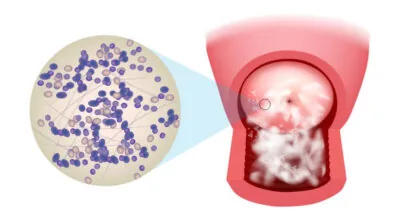
Vaginal yeast infection most commonly develops due to Candida type fungi. A humid environment, especially in summer, can facilitate the proliferation of fungi.
Vaginal fungal symptoms
- Intense itching
- Burning sensation in the vaginal area
- Redness
- Swelling
- Pain during intercourse
- Burning when urinating
- White discharge with the appearance of curdled milk or curd cheese
- Generally no noticeable bad odor
The most striking symptom of fungal infection is often severe itching.
What are the symptoms of bacterial vaginosis?

Bacterial vaginosis occurs when the balance of natural bacteria in the vagina is disrupted. In fact, it is not a sexually transmitted infection in the classical sense, but it may be related to changes in sexual life and vaginal flora.
Symptoms of bacterial vaginosis
- Thin gray or white discharge
- Bad smell, especially fishy smell
- Increased odor after intercourse
- Slight burn
- Some women have no symptoms
Itching in bacterial vaginosis is usually milder than in fungal infection.
Difference Between Vaginal Fungus and Bacterial Vaginosis
Since both diseases can cause similar complaints, it is often not possible to differentiate just by looking at the symptoms.
| Feature | Vaginal Fungus | Bacterial Vaginosis |
| Itching | Very obvious | Light or absent |
| Current | White, dense, rough | Thin, grey-white |
| Smell | Usually not available | Distinct fishy odor |
| Burning | Common | Visible |
| Redness | Often exists | Less common |
Although these symptoms help in the diagnosis, gynecological examination and, when necessary, vaginal sampling may be required for a definitive diagnosis.
What Do Itching, Burning, Odor and Discharge Mean?
Vaginal discharge is not always a sign of disease. Natural vaginal discharge may also occur in healthy women, depending on the hormonal cycle.
However, the possibility of infection should be considered in the following cases:
- Change in the color of the discharge
- Intense bad odor
- Severe itching
- Burning sensation
- Pain during intercourse
- Redness in the genital area
- Accompanied by fever or groin pain
The cause of complaints may not only be fungal or bacterial vaginosis. Different infections or other gynecological diseases may also cause similar symptoms.
Random Medication Should Not Be Used for Every Flow

One of the most common mistakes women make is reusing medications left over from a previous infection or starting treatment with a recommendation from the pharmacy.
However;
- What is thought to be a fungal infection may be bacterial vaginosis.
- What is thought to be bacterial vaginosis may be a different vaginal infection.
- Incorrect medication use may temporarily suppress symptoms but may not solve the underlying problem.
- Unnecessary treatments may disrupt the natural balance of the vaginal flora.
Therefore, it is important to make the correct diagnosis before starting treatment.
When is a Gynecological Examination Necessary?

In the following cases, a gynecologist and obstetrician should be consulted without delay:
Evaluation should not be delayed if there are these symptoms:
- If this is your first vaginal infection
- If the complaints do not improve within a few days
- If you have frequently recurring infections
- If an infection developed during pregnancy
- If accompanied by fever or groin pain
- If bloody discharge is observed
- If complaints continue despite the treatment used
When deemed necessary during gynecological examination, the diagnosis can be supported by vaginal pH evaluation, microscopic examination or laboratory tests.
Daily Tips to Prevent Vaginal Infections in Summer
Simple daily habits can help reduce the risk of infection.
protective habits
- Change your wet swimsuit as soon as possible after swimming or swimming.
- Choose cotton underwear.
- Do not wear too tight clothing for long periods of time.
- Take care to keep the genital area dry.
- Avoid unnecessary vaginal douching.
- Use antibiotics only with a doctor's advice.
- Choose personal hygiene products consciously.
- Do not self-medicate when complaints occur.
Conclusion
The incidence of vaginal infections may increase in summer. However, not every itching means a fungal infection, and not every foul-smelling discharge means bacterial vaginosis. Similar symptoms may also be a sign of different diseases. Therefore, it is important to be evaluated by a gynecologist and obstetrician to make the correct diagnosis and plan the appropriate treatment.
Detailed gynecological examination, necessary diagnostic evaluations and personalized treatment planning for women experiencing symptoms of vaginal infection are important steps in terms of both eliminating complaints and preventing recurrent infections. The evaluation and treatment process in this regard is Op. Dr. It is individually planned by Tuba Nadide Yılmaz.
For detailed information and appointment, you can contact us .
We are here for your questions
Contact our clinic for information and appointment requests.
Contact the clinic