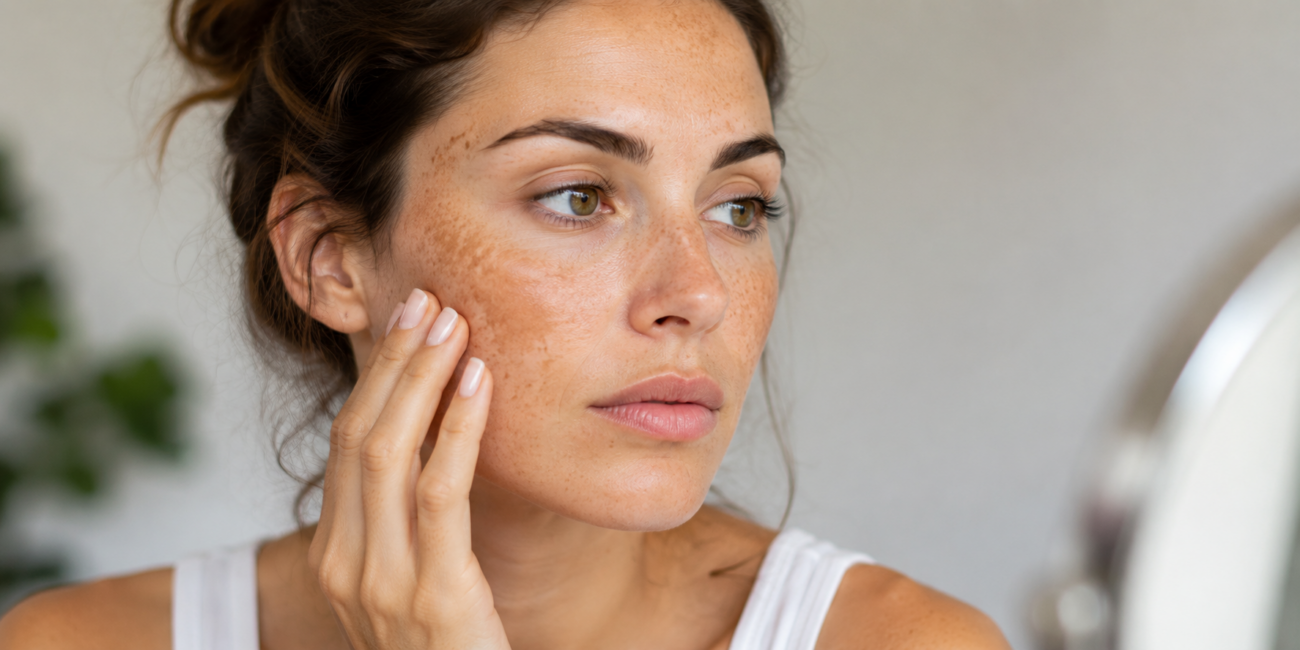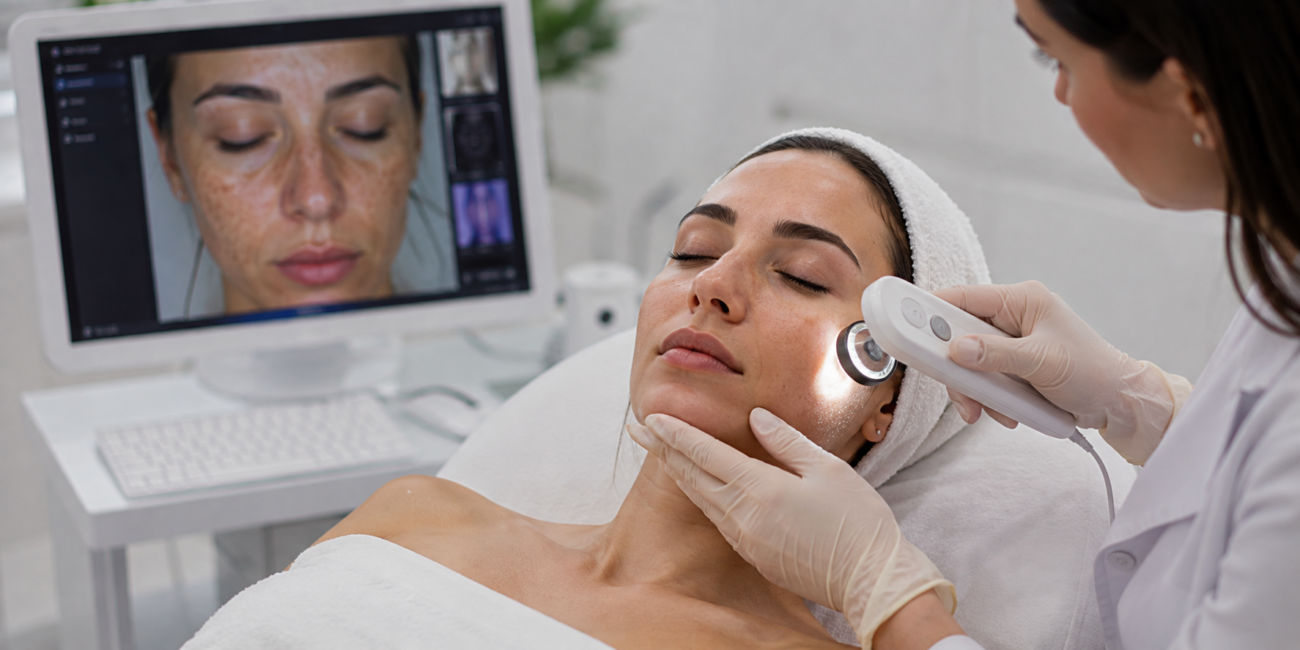
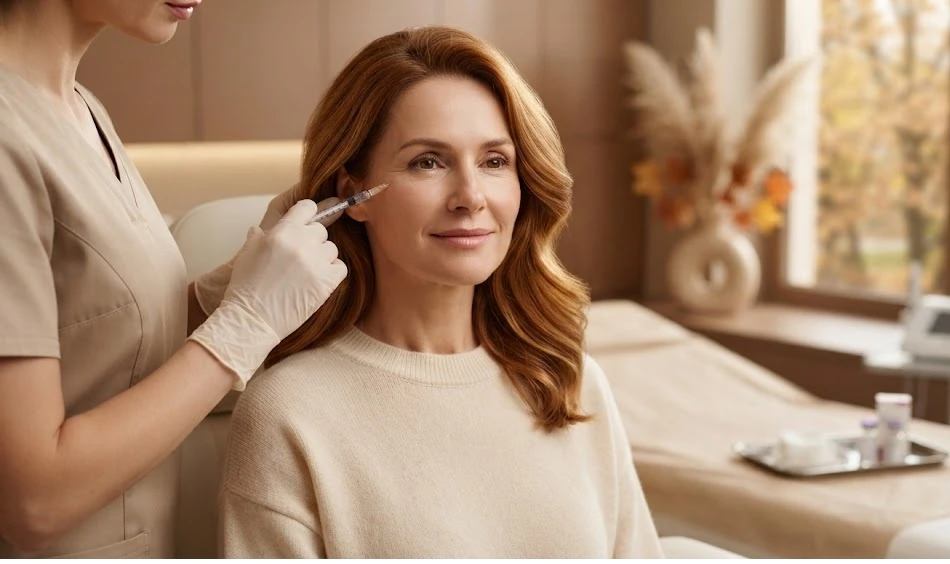
Some skin changes may become more noticeable as summer ends. After substantial sun exposure, dark spots may deepen, skin tone may appear less even, and dryness and dullness may become apparent. Expression lines may also become more noticeable, particularly on the forehead, between the eyebrows and around the eyes.
Interest in medical aesthetic treatments such as Botox in autumn, mesotherapy, PRP and chemical peels therefore often increases at this time of year.
However, there is an important distinction: although these treatments are often grouped under “skin rejuvenation,” they do not all address the same problem.
For example, Botox targets dynamic lines caused by the movement of facial muscles; it is not a treatment for removing sun spots. Peels, mesotherapy and PRP also have different purposes.
When planning post-summer skin care, the first step is therefore to identify what the skin actually needs, rather than having every treatment at once.
What Can Change in the Skin After Summer?
The effects of sunlight on the skin go beyond tanning and sunburn.
Repeated exposure to UVA and UVB radiation can contribute to photoaging over time. Possible changes include:
- Increased pigmentation
- More prominent sun spots
- Uneven skin tone
- Dryness and a dull appearance
- More noticeable fine lines
- Uneven skin texture
These are among the changes that may occur.
Dark patches may become more noticeable after summer, particularly in people prone to melasma.
Autumn skin care therefore involves more than choosing an aesthetic procedure. The cause of pigmentation, lines or changes in skin quality should be assessed first.
Can You Have Botox in Autumn?
Yes. Botulinum toxin treatment can be planned in autumn for suitable individuals.
However, a common misunderstanding needs to be addressed.
Botox should not be described as a treatment that can only be performed in autumn.
After an appropriate assessment, botulinum toxin can be administered at different times of year. One reason autumn receives attention is that many people revisit their aesthetic treatment plans after summer holidays and periods of intense sun exposure.
The answer to “When should you have Botox?” therefore does not depend on the season alone.
Facial expressions, existing lines, previous treatments, expectations and general health should all be considered.
What Does Botox Do?
The main aim of cosmetic botulinum toxin treatment is to temporarily reduce the activity of certain facial expression muscles.
In particular:
- Forehead lines
- Frown lines between the eyebrows
- Crow's feet around the eyes
These are dynamic lines that become more visible with facial movement.
Lines that are barely visible when the face is at rest but appear when frowning, smiling or raising the forehead are called dynamic wrinkles.
Botulinum toxin has its most noticeable effect on this type of line.
Does Botox Remove Sun Spots?
No.
This distinction is particularly important for anyone considering Botox after summer.
Botox is not a treatment for sun spots or melasma.
By reducing movement in certain muscles, botulinum toxin helps soften the appearance of expression lines. It does not work by removing excess pigment from the skin.
If someone has both forehead lines and sun spots after summer, the two concerns therefore need separate assessment.
Botulinum toxin may be considered for expression lines, while pigmentation may require a different plan based on skin type and the characteristics of the dark spots.
What Should You Do About Dark Spots After Summer?
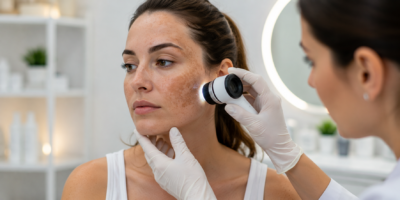
Not every brown patch that appears or becomes more noticeable after summer is the same type of pigmentation.
Melasma, solar lentigines and post-inflammatory hyperpigmentation have different characteristics.
This distinction directly affects treatment selection.
Sunlight is an important trigger, particularly in melasma. A procedure aimed solely at reducing existing pigmentation may therefore be insufficient. Regular sun protection to help limit new pigment formation is also an important part of treatment.
How Do Botox, Mesotherapy, PRP and Peels Differ?
These four treatments are often grouped together.
However, they serve different purposes.
Botox: Targeting Expression Lines
Botulinum toxin treatment primarily targets muscle movement.
Botox may be considered when dynamic lines on the forehead, between the eyebrows or around the eyes are the main concern.
Its main purpose is not to exfoliate the skin, remove sun spots or add volume.
Mesotherapy: An Approach Focused on Skin Quality
Mesotherapy involves injecting small amounts of various substances into the skin.
However, “mesotherapy” does not refer to one product or a standardized formula. Its purpose and potential results vary with the substances used.
Some hyaluronic acid-based intradermal treatments are used to support skin hydration, elasticity and overall skin quality.
Mesotherapy should therefore not automatically be described as a pigmentation treatment or an alternative to Botox.
PRP: A Treatment Prepared from Your Own Blood
PRP uses platelet-rich plasma obtained from the person's own blood.
Some studies of its use for skin rejuvenation have reported positive findings for measures such as skin texture, fine wrinkles, radiance and hydration.
However, PRP preparation and application methods vary between studies, as does the quality of the scientific evidence.
PRP should therefore not be expected to produce the same result for everyone.
Chemical Peels: Focusing on the Skin Surface and Pigmentation
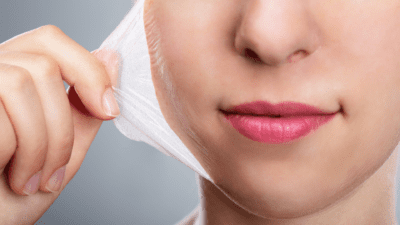
A chemical peel involves the controlled application of a chemical solution to the skin.
Depending on the type and depth of the peel, it may be considered for:
- Uneven skin tone
- Certain pigmentation concerns
- A dull appearance
- Superficial fine lines
- Some types of acne
- Superficial changes associated with sun damage
These are among the concerns for which it may be assessed.
However, not every peel is suitable for every skin type.
Particular care is needed regarding pigment changes after treatment in people with darker skin tones or a tendency toward hyperpigmentation.
Should You Have All These Treatments at Once?
In most cases, there is no need to do so.
Botox, mesotherapy, PRP and peels target different concerns.
Expression lines may be the main concern for one person, while sun spots, dryness or uneven skin tone may be more prominent for another.
Planning around individual skin needs is therefore more appropriate than a standard “autumn package” of Botox, PRP, mesotherapy and a peel.
Which Treatment Might Be Considered for Which Concern?
As a general guide:
If expression lines are the main concern: Botulinum toxin may be considered.
If dullness, dehydration and overall skin quality are the main concerns: Mesotherapy or other skin rejuvenation treatments may be considered, depending on the substances used.
If the aim is to support skin quality using a regenerative approach: PRP may be one option.
If pigmentation, surface irregularities or certain signs of sun damage are the main concerns: A chemical peel suited to the skin type or another pigmentation treatment may be considered.
However, these are not definitive treatment matches.
The same concern can have different causes, so treatment should be chosen after a skin assessment.
Why Does Skin Type Affect the Treatment Plan?

Not every skin type responds to the same treatment in the same way.
Planning may be affected by:
- A lighter or darker skin phototype
- A tendency toward sensitivity
- A history of melasma
- A tendency toward acne
- Active inflammation
- Previous aesthetic treatments
- Skin care products being used
These factors can influence treatment planning.
Aggressive procedures need careful planning, particularly in people prone to pigmentation, because skin irritation can cause post-inflammatory hyperpigmentation in some individuals.
Autumn skin care should therefore be tailored to the individual.
Does Your Tan Need to Fade Before Post-Summer Botox?
Botox does not target pigment in the skin.
Tanning therefore does not affect Botox planning through the same mechanisms as it does chemical peels and certain laser treatments.
However, the skin should be assessed first if it is sunburned, significantly irritated or affected by an active skin problem in the treatment area.
Medical aesthetic planning considers the current condition of the tissue as well as the procedure itself.
Can You Have a Peel After Botox?
Different medical aesthetic treatments may form part of the same plan for some people.
This does not mean that they must be performed on the same day.
Timing can be planned according to the Botox injection sites, the area to be peeled, peel depth, skin sensitivity and other planned procedures.
It is therefore better for the clinician to determine the sequence than to follow a fixed online timetable stating a set number of days between treatments.
Why Are Peels Discussed More Often in Autumn?
After a chemical peel, the skin needs particularly careful protection from the sun.
Autumn and winter, when intense summer sunlight starts to decrease, can therefore offer practical advantages for planning some peels.
However, this does not mean that sunscreen can be stopped in autumn.
On the contrary, sun protection is an important part of the plan for anyone considering a peel or pigmentation treatment.
Do You Need Sunscreen in Autumn and Winter?
Yes.
Sun protection is not just a summer holiday habit.
UVA radiation can reach the skin throughout the year and pass through window glass. Visible light can also contribute to pigmentation in some people, particularly those prone to hyperpigmentation.
Broad-spectrum sunscreen therefore remains important in autumn and winter.
For people with melasma or hyperpigmentation in particular, sun protection is a core part of the treatment plan as well as preventive care.
When Should Autumn Skin Care Begin?
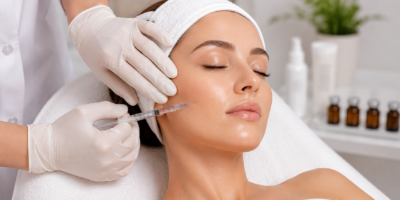
There is no need to wait for a particular date on the calendar.
If you notice a new dark spot, uneven tone, dryness or another change after substantial sun exposure, the skin's current condition can be assessed first.
If there is active sunburn or significant irritation, some treatments may need to wait until the skin recovers.
A step-by-step plan can then be developed around the person's concerns.
When Should You Have Botox?
There is no single seasonal answer to “When should you have Botox?”
It can be performed at different times of year in suitable individuals.
More relevant factors when planning its timing include:
- The condition of expression lines
- The timing of previous Botox treatment
- Facial anatomy and muscle activity
- Other planned medical aesthetic treatments
- The skin's current health
- Personal expectations
These factors help guide the timing.
Autumn can be a suitable time to make this plan, particularly alongside a post-summer skin assessment.
How Is an Autumn Skin Rejuvenation Plan Developed?
Good medical aesthetic planning starts by identifying the problem before choosing the procedure.
For example, the same person may have forehead lines, sun spots on the cheeks and generally dull skin.
One procedure should not be expected to address all three concerns.
Botulinum toxin may be considered for expression lines, an appropriate pigmentation treatment for dark spots, and a different treatment tailored to the person's needs for skin quality.
Some procedures can be combined within the same treatment period, while others may be better scheduled separately.
The Aim in Autumn Should Be to Choose the Right Treatment

It is understandable that interest in Botox in autumn and skin rejuvenation increases. Dark spots, uneven tone, dullness and fine lines may become more noticeable after summer sun exposure.
However, these changes are not all treated using the same method.
Botox primarily targets dynamic lines caused by facial muscle movement and is not a treatment for sun spots. Mesotherapy may be planned to support skin quality depending on the substances used. PRP is a different biological approach. A chemical peel may be considered for certain pigmentation and skin surface changes in suitable individuals.
For anyone planning Botox after summer or autumn skin care, the first step is therefore to correctly identify the skin changes, rather than have as many procedures as possible.
At Dr Tuba Nadide Yılmaz's Clinic, Botox, PRP, mesotherapy and other medical aesthetic treatments can be planned after assessing the person's skin, existing concerns and expectations.
Contact us to discuss an appropriate treatment plan.
We are here for your questions
Contact our clinic for information and appointment requests.
Contact the clinic